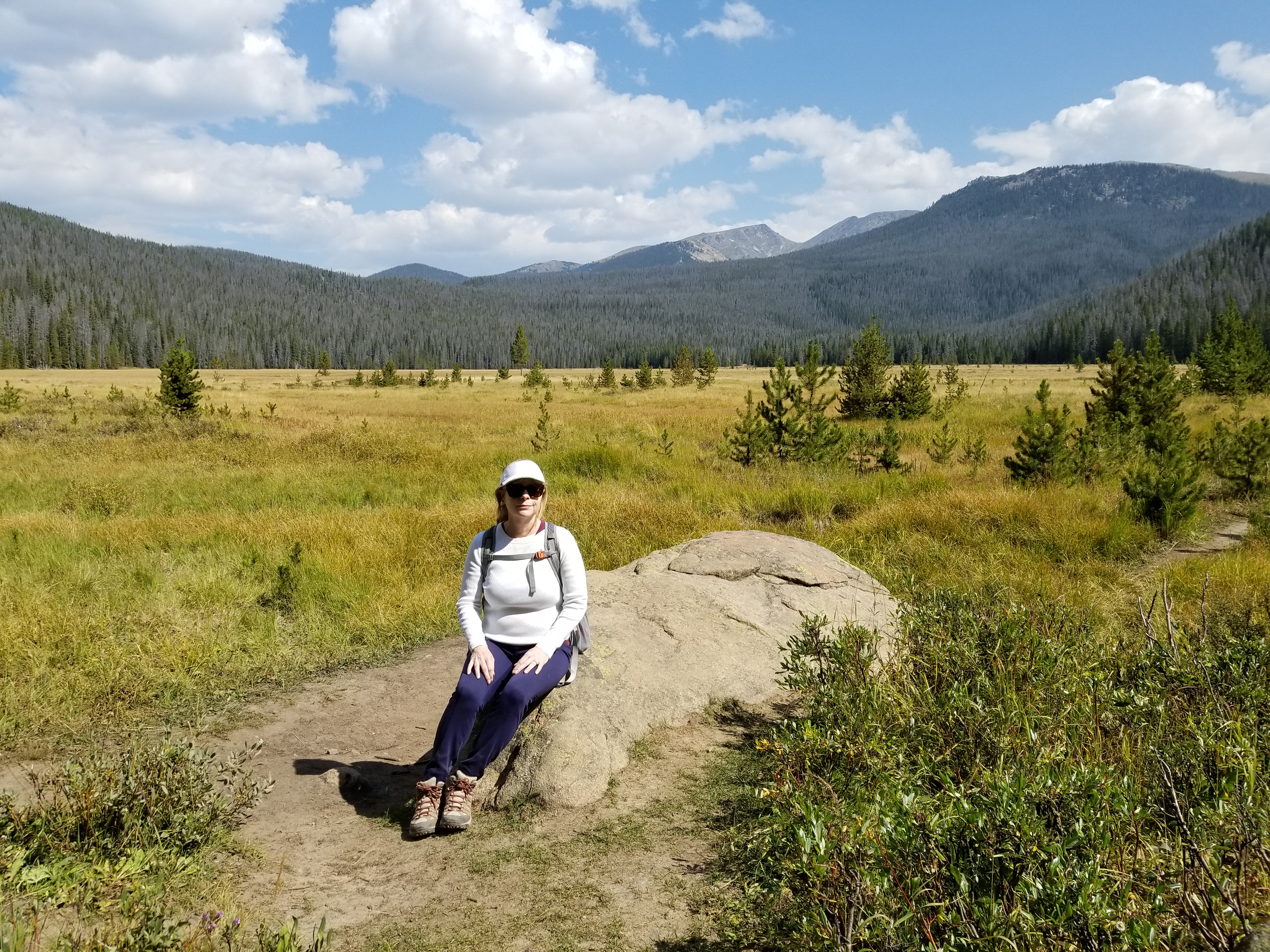
Rocky Mountain National Park, another great day for hiking. I think it will be our last for this trip. Tomorrow we will do some tourist stuff before getting back on the train to Chicago.
We didn’t get to see any large critters until we got back in the car to head home today. Trying to cross the road in front of us was a female Elk. We were a few feet short of making it to 10,000 on todays hike. The air is a little thin up here. There are new pics in the Rocky Mountain section.
There is a specific kind of magic that happens when you crest the 10,000-foot mark in Rocky Mountain National Park (RMNP). The air turns crisp, the trees give way to resilient alpine tundra, and the world below seems to dissolve into a sea of jagged granite peaks. Whether you’re a seasoned “peak bagger” or a casual stroller looking for the perfect reflection in a glacial lake, RMNP is the ultimate playground.
After spending a week exploring its trails, I’ve realized that this park isn’t just a destination; it’s a high-altitude challenge that rewards you with views you’ll see on postcards for the rest of your life.
The “Big Three” Lakes: Nymph, Dream, and Emerald
If you only have one morning in the park, head straight to the Bear Lake Trailhead. While it’s the most popular spot, there’s a reason for the crowds. The trail to Emerald Lake is a 3.6-mile round-trip journey that packs three stunning alpine lakes into one hike.
-
Nymph Lake: Famous for its lily pads.
-
Dream Lake: Where you get that iconic view of Hallett Peak reflected in the water.
-
Emerald Lake: The finale, tucked into a dramatic cirque of towering cliffs.
Pro Tip: In 2025, the park still utilizes a Timed Entry Permit System. If you want to access the Bear Lake corridor, you’ll need a specific “Park Access+” reservation. Aim for a 5:00 AM or 6:00 AM slot to beat the heaviest crowds and catch the sunrise hitting the peaks.
For the Adventurous: Sky Pond
For those looking to trade the “easy” rating for a bit of a scramble, Sky Pond is my personal favorite. Starting from Glacier Gorge, this 8.6-mile trek takes you past the thundering Alberta Falls and the serene waters of The Loch.
The highlight? The scramble up Timberline Falls. You’ll literally be climbing up a waterfall (don’t worry, there are plenty of handholds) to reach the “Lake of Glass” before finally arriving at Sky Pond. Surrounded by “The Sharkstooth” and other jagged spires, it feels like you’ve stepped onto another planet.
Survival Tips for the Rockies
Hiking at altitude is no joke. Most of these trails start above 9,000 feet, which can leave even fit hikers gasping for air.
-
Hydrate Like It’s Your Job: The air is incredibly dry. I recommend carrying at least 2–3 liters of water and adding electrolytes.
-
The “12:00 PM Rule”: Afternoon thunderstorms are frequent and dangerous in the Rockies. Plan to be back below the treeline (or at your car) by noon to avoid being exposed to lightning on open ridges.
-
Layers are Life: I’ve seen it go from 70°F (21°C) to a sleeting 35°F (2°C) in twenty minutes. Always pack a waterproof shell and a lightweight puffer jacket.
Getting Away from the Crowds
If you want solitude, skip the Bear Lake area and head to the Wild Basin in the southern part of the park. Trails to Ouzel Falls or Bluebird Lake offer the same rugged beauty with a fraction of the foot traffic. Alternatively, the Ute Trail along Trail Ridge Road offers a relatively flat hike across the tundra with sweeping, 360-degree views of the Continental Divide.
Rocky Mountain National Park is a place that humbles you. It reminds you how small we are and how vast the world remains. So, lace up those boots, grab your permit, and get out there—the mountains are calling, and they’re even better in person. Visit our Asia Gallery